

Cook County Property Tax System
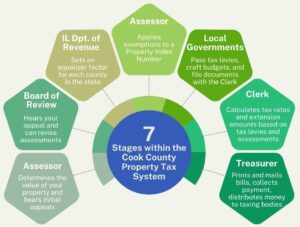
Cook County Assessor’s Office:
How our office can help you:
- Understanding property tax exemptions and what you qualify for
- Understanding the appeal process, when you appeal, when your property will be reassessed
- Filing exemptions, appeals, and certificates of error and tracking progress
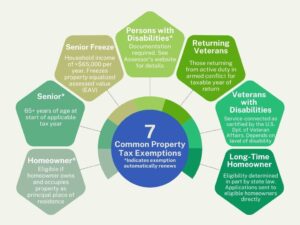
Use this link to:
- Search your property by address or PIN number
- View your property characteristics, assessments, and exemptions
Assessor’s Online Filing Portal
Use this link to:
- File for Residential exemptions, appeals, certificates of error

Open Filing Windows:
Exemptions: Closed (will open Spring 2026)
Appeals: All Chicago Townships Closed with Assessor’s Office until mid-2026
Board of Review: Appeals for North Chicago Township open through February 18th
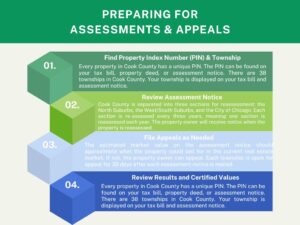
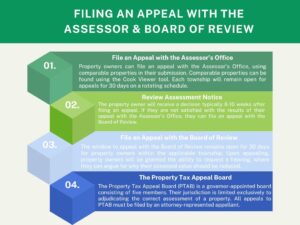
Cook County Board of Review:
How our office can help you:
- Filing appeals
- Checking status of appeals
Use this link to:
- File an appeal
- Check open/pre-file periods for all townships
Board of Review Appeal Decision Search
Use this link to:
- Check status of your appeal
Cook County Treasurer’s Office:
How our office can help you:
- Reviewing current and historic tax bills
- Viewing or updating mailing address
- Ensuring exemptions are reflected
- Viewing unpaid or delinquent taxes
Cook County Treasurer Property Tax Overview
Use this link to:
- View all property information including tax bills
- Pay your property taxes
Cook County Clerk:
How our office can help you:
- Redeeming sold taxes
- Correcting errors in PIN recordings
- Property fraud issues and chain of title
- Transfer on Death Instrument (TODI)
Property Fraud:
The Clerk’s Office has a dedicated Property Fraud Unit that focuses on the prevention and investigation of property fraud. Property owners should always be on alert for potential Property or Recording fraud against their home or properties. Fraudsters can target homes and paid-for homes that have no mortgage and file forged documents with a county recorder.
To create a property fraud alert for your properties click HERE.
Tax Redemption:
If your unpaid taxes have been sold (at an annual tax sale, scavenger sale or over the counter), the Clerk’s office can provide you with an Estimate of the Cost of Redemption, detailing the amount necessary to redeem (pay) your taxes and remove the threat of losing your property.
If your taxes have been sold, you should immediately obtain an Estimate of the Cost of Redemption. This is a calculation of the amount you need to pay to redeem the sale and remove the threat of loss of the property.
You are advised to redeem the taxes immediately, as penalties and fees can increase and can multiply over time. Tax buyers are also allowed to add their costs which will increase the amount of the redemption as well. All taxes, fees, penalties and costs must be paid in full; there are no partial payments or payment plans for redemption of a tax sale.
Tax Extension and Rate:
The Clerk’s Tax Extension Unit is responsible for calculating property tax rates for all local governments, or taxing districts, in Cook County that authorize the collection of revenue through real estate taxes.
How tax rates are calculated:
- The Cook County Assessor’s office establishes property valuations.
- Taxing districts file their levy requests with the Clerk’s Tax Extension Unit.
- To produce the revenue requested, the Tax Extension Unit uses the levy to determine the tax amount to be “extended” against all properties located within the boundaries of the taxing district.
- The Clerk’s Tax Extension Unit determines the rate needed per $100 of taxable value to generate the requested revenue, based on the value of all taxable property within the district boundaries
(Note: Limits under Illinois law can restrict the revenue, either through statutory maximum rates for certain purposes and/or through “tax caps,” which limit the total amount extended. Extension limits are not applied to funds needed to pay bonds and certain other charges.)